
Wake County Housing Affordability and Community Revitalization
Annual Housing Impact Report
2025
Executive Summary
Wake County is making measurable progress to expand housing affordability, prevent homelessness, and strengthen community stability. Through targeted investments, cross-sector partnerships, and data-driven strategies, the County is increasing the supply of affordable homes, preserving existing affordability, and improving outcomes for residents experiencing homelessness.
What’s Driving Progress
Wake County’s advancements are rooted in three core strategies:
- Production — expanding affordable housing supply
- Preservation — protecting existing affordability
- Prevention & System Response — making homelessness rare, brief, and non-recurring
Looking Forward
In 2026, Wake County will continue its momentum by launching the Housing Opportunity Fund, completing Second Street Shelter Phase II, and deepening municipal partnerships through the Municipal Impact Fund. These collective efforts reflect the County’s commitment to ensuring every resident has access to safe, stable, and affordable housing.
Note on Data and Programs: Data trends in this report reflect the longest available historical periods to provide context, while stated goals align with Wake County’s 2024–2029 Strategic Plan. Program outcomes represent a mix of County-administered initiatives and County-funded efforts delivered in coordination with partners. References to external studies or projections are included to illustrate broader housing and system trends.
Introduction
2025 was a year marked by rapid growth, significant market shifts, and rising demand for affordable housing. With over 200,000 new residents and 150,000 new jobs added in the past decade, Wake County is thriving, but that success has intensified housing demand.
Wake County’s rapid growth has outpaced its housing supply especially at affordable price points. This reality is why the County is strengthening proactive strategies to preserve affordability, stabilize existing households, and expand housing options across all municipalities.
Wake County will need between 18,000 and 23,000 new homes annually to keep up with demand. Without targeted investment, affordability will continue to decline. Wake County is committed to being proactive in protecting affordability, and as a result, has implemented strategic, data-informed approaches that are already generating results.
At the same time, these efforts directly advance the County’s Strategic Plan, ensuring that every investment in housing contributes to larger countywide goals. This work reflects a whole-department approach, with all five divisions working in alignment toward housing stability and affordability.


The State of Housing in Wake County
Wake County’s rapid growth has brought prosperity, but it has also intensified pressure on the housing market. Rising rents, limited affordable supply, and widening gaps in access have made it increasingly difficult for many residents to secure and maintain stable housing.
A healthy housing ecosystem depends on a balance between affordability, supply, and housing stability. When one of these elements weakens, the impacts ripple across households, neighborhoods, and the broader economy.
Housing affordability ensures that households can find homes without paying more than a third of their income on housing. Housing supply ensures that there are enough homes across various income levels and household types. Without enough supply, households will compete for the same limited stock, driving prices up and continuing to reduce choices for lower-income residents. Stability ensures that residents have the support to remain safely housed over time. Stability supports school performance, job retention, and access to social capital an ensures that people continue to have the resources needed to thrive.
The three are inextricably linked, and when one is threatened, so are the others. When supply is constrained, affordability becomes more difficult to achieve. When affordability declines, stability is threatened, and when stability weakens, the supply of affordable housing shrinks. The cycle repeats.
The following data illustrates the state of these housing factors in 2025, and why an intentional, coordinated response targeting affordability, supply, and stability is more critical than ever.
The State of Housing in Wake County
Affordability
As of 2025, Wake County's housing landscape reflects both economic strength and affordability challenges. While housing development continues across Wake County, affordability challenges have grown more acute.
Rental Affordability
Median rent has increased 34 percent since 2018 in Wake County, while renter income has not matched this pace and stands at just $61,376. A household must earn more than $69,000 annually to afford the median rent without becoming cost burdened.
More than 70,000 renter households in Wake County are already cost-burdened, paying more than 30 percent of their income toward housing. Of those, nearly 33,000 are severely burdened, spending over half their income on rent. This impact is concentrated among the County’s low- and extremely-low-income households, many of whom work in essential services like firefighters, preschool teachers, retail workers, and home health aides. This financial strain increases the likelihood of eviction, homelessness, or forced relocation for many households.
In some municipalities, more than 40% of renters struggle with affordability. These patterns highlight the need for location-specific interventions that respond to varied local housing markets.
Supply Shortage
The County also faces a shortage of more than 27,000 rental homes for households earning under $35,000 per year. This is 2.3 full-time jobs at minimum wage, or a full-time job at $16.82 an hour. Only 18 affordable homes exist per 100 renters earning below $20,000 per year, and only 33 homes per 100 renters exist for those earning below $35,000 per year. This extreme supply-demand mismatch continues to push many into overcrowded or unsafe housing situations
Homeowner Affordability
Homeowner affordability is increasingly strained in the County as incomes rise while housing supply fails to meet demand.
Wake County’s median home price in September 2025 was $460,000, a 73 percent increase since 2018. Rapid price appreciation occurred around 2020 when interest rates were at a historic low and Wake County received high levels of in-migration during the COVID-19 pandemic. Despite the interest rate increases, costs have remained elevated which leaves many low- and moderate-income households effectively priced out of homeownership.
At the same time, existing homeowners who purchased a home during the low-interest rate period are choosing not to move, further constraining supply. Although new construction activity has reached 10-year highs, it cannot keep pace with the population growth. Most new homes are also not affordable to low-income buyers without some sort of subsidy or assistance.
Almost 50,000 homeowners are cost-burdened in Wake County, spending more than 30 percent of their income on housing. Like many fast-growing regions, rising housing costs continue to create pressure for long-term and fixed-income homeowners.
Income Required to Afford a Home
In addition to these ongoing pressures, the gap between the income required to purchase a median-priced home at current interest rates and the actual median household income continues to grow. Although incomes have gone up for select households in the County, home prices have appreciated at a far faster rate, showing that affordability is not within reach for many prospective buyers.
Aging Housing Stock
The County will also continue to see the aging of the existing housing stock. The median year built of owner-occupied homes is 1999 (ACS 2019 – 2023 5-Year estimate). Older homes have greater upkeep needs, including necessary system upgrades and replacements such as roofs and HVAC systems, that can threaten stability to homeowners who live on lower or fixed incomes who struggle to afford them.
Why it matters: When housing costs outpace wages, families are forced to make tradeoffs forgoing savings, medical care, or stable childcare and are at greater risk of eviction or displacement, living in substandard conditions and homelessness. Different pressures will impact renters and homeowners, and targeted strategies are required to manage this spectrum.
The State of Housing in Wake County
Supply
Keeping up with Demand
A North Carolina Chamber of Commerce found that Wake County will have a projected shortfall of about 110,000 homes (both rental and ownership) between 2024 and 2029.
As vacancy rates remain low particularly for owner-occupied units, which sit at just 0.7% compared to a healthy 5%, the creation of new housing supply will be critical to a balanced housing market. Without additional supply, shortages will continue to intensify affordability pressures by forcing renters and homebuyers to compete for limited inventory and driving prices higher.
Wake County continues to build housing at a faster rate than the state at large. Residential building permits issued have expanded significantly over the last 5 years and continue to remain high, but it will likely fall short relative to the scale of demand.
Supply Mismatch
There is also a mismatch between the new supply being added and the demand at each income level. Most new housing stock is built for higher-income households, leaving surplus units for those making over $75,000 annually, but deficits for households making less. This reflects market conditions and land use patterns that continue to limit where and how housing can be developed. In many communities, zoning and infrastructure availability favor single-family homes or higher-end developments. This constrains the opportunities to build smaller, and often more affordable housing units near jobs, services, and transit hubs.
The Federal Housing Finance Agency estimates that land values in Wake County have increased by almost 110 percent between 2012 and 2022. As interest rates remain high, and construction costs continue to escalate, meaningful additions to the housing market will be harder to achieve. This is especially true of affordable housing developments, which must offset the affordable rent or mortgage for the end user with additional subsidies.
Why it matters: As demand continues to outpace supply, affordability will remain difficult to achieve. Even as new residential homes come online, most are priced well above what many County residents can afford. This continues to highlight the growing disconnect between what’s being built and what’s needed. Working with municipalities to encourage more diverse housing types can help expand supply in a meaningful and balanced way.
The State of Housing in Wake County
Stability
The Risks of Housing Insecurity
In an increasingly unaffordable market, it is easy for low-income households to fall into homelessness, but difficult to exit homelessness without adequate support systems. Across the United States, wages have not kept pace with the cost of rent. A minimum wage worker must work 116 hours per week to afford a modest two-bedroom rental and 97 hours per week to afford a one-bedroom. For individuals relying on Supplemental Security Income (SSI) at $967 per month, housing options are extremely limited, placing them at significantly higher risk of housing loss and instability.
As housing costs rise, supportive services become essential to long-term stability. For individuals exiting homelessness who are managing behavioral health needs, health conditions, or disabilities, services such as case management, healthcare coordination, behavioral health supports, and life-skills assistance help households maintain housing and avoid crises. These services also reduce reliance on high-cost systems such as hospitals, shelters, and the justice system, making stability-focused investments both effective and cost-efficient.
In 2024, the Point-in-Time (PIT) count recorded 992 people experiencing homelessness in Wake County, including 785 households. Approximately 5% were youth ages 18–24, and 15% met the definition of chronic homelessness, as defined by HUD. The preliminary 2025 PIT count estimates 1,258 people, with 25% experiencing chronic homelessness. This shift reflects both the ongoing pressure of housing costs and the need to ensure that affordable housing is paired with supportive models that prevent recurring homelessness.
Homelessness is not only a housing crisis, but also a system capacity issue. When individuals cycle between shelters, emergency rooms, jails, and hospitals, the result is instability for households and high, avoidable public costs for the community. Stability requires a coordinated approach that combines access to housing with the right level of supportive services based on individual needs.
Wake County has developed a continuum of stability-focused programs that respond to these conditions. Bridge to Home provides flexible supports for households as they move toward housing; Landlord Engagement Unit expands access to actual units by partnering with landlords; and the McKinney supportive housing team, in partnership with CASA, provides long-term, coordinated support for residents with the most complex needs. Together, these programs demonstrate that when housing and supportive services work in tandem, stability is possible.
Why it matters: Stable housing is foundational to individual well-being, family stability, and long-term community health. Preventing displacement reduces strain on public systems and supports stronger neighborhoods. Ensuring that residents can both access housing and remain stably housed is essential to supporting economic mobility and reducing housing access challenges across the county.
These affordability, supply, and community stability challenges demand coordinated, data-informed action. Wake County and its partners are responding with targeted investments, innovative programs, and a clear focus on measurable results. The next section highlights progress toward the County’s Strategic Plan goals and the strategies advancing housing affordability across the community.
Strategic Plan Progress
Wake County is making measurable progress toward its housing goals by focusing on three core strategies:
- Increasing the supply of affordable homes,
- Preserving existing affordability, and
- Strengthening the homelessness response system.
Together with our partners, developers, municipalities, service providers, and residents, we are building a more stable housing landscape one that ensures every resident has a place to call home.
Strategic Plan Progress
Production
Expanding the Supply of Affordable Housing
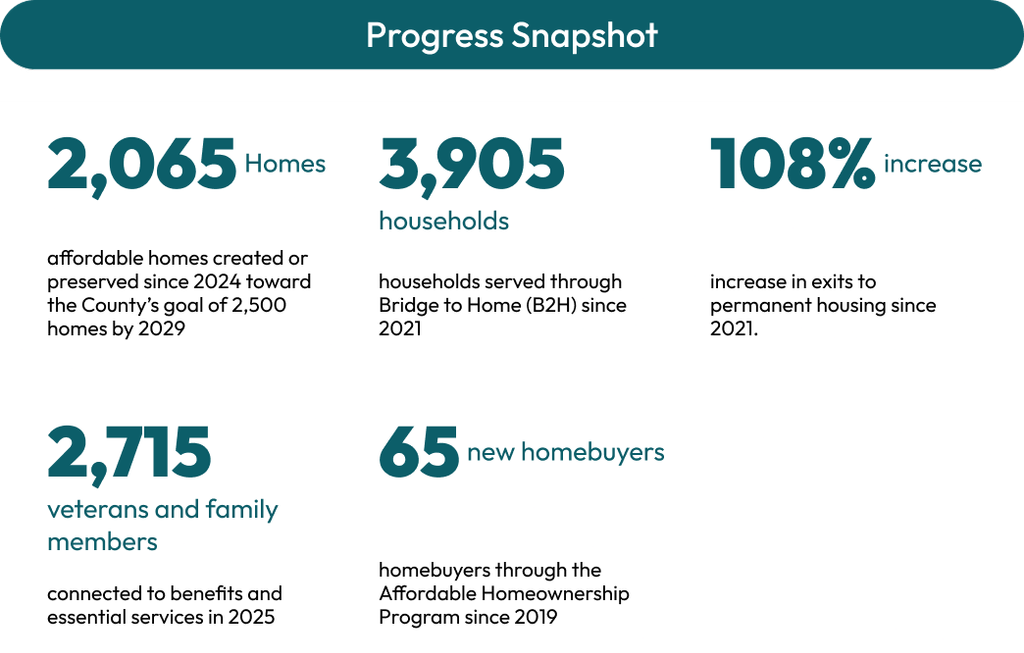
Wake County’s Strategic Plan sets a benchmark of creating and preserving 2,500 affordable homes by 2029. Since the beginning of 2024, 2,065 homes have been supported, representing 70% of the target achieved in the first two years of the goal. In total, Wake County has created and preserved over 5,400 homes since 2019, which is over 120% greater than the production of the previous 20 years combined. All of these homes were delivered by leveraging County investments, strong developer partnerships, and coordinated work with local municipalities.
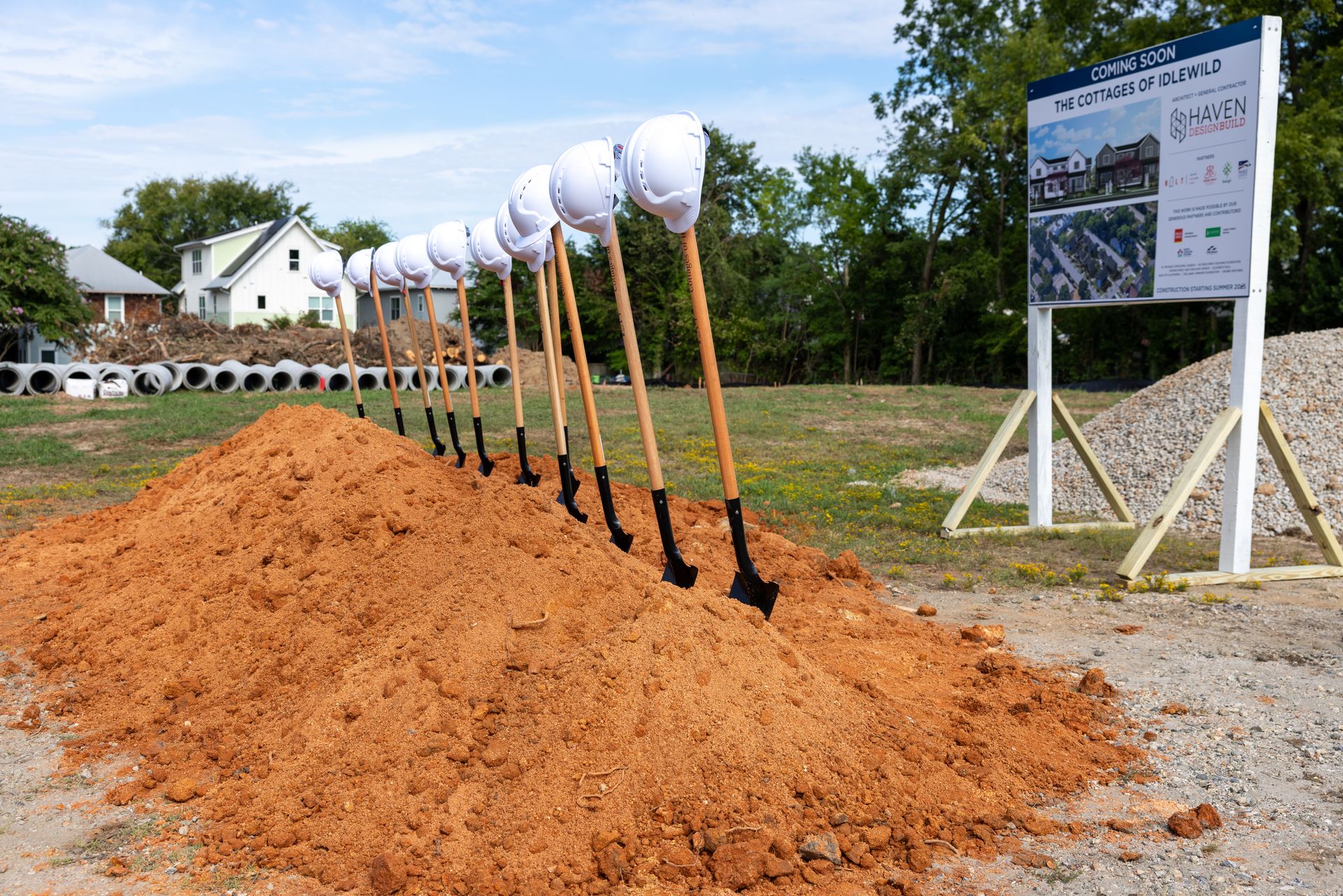
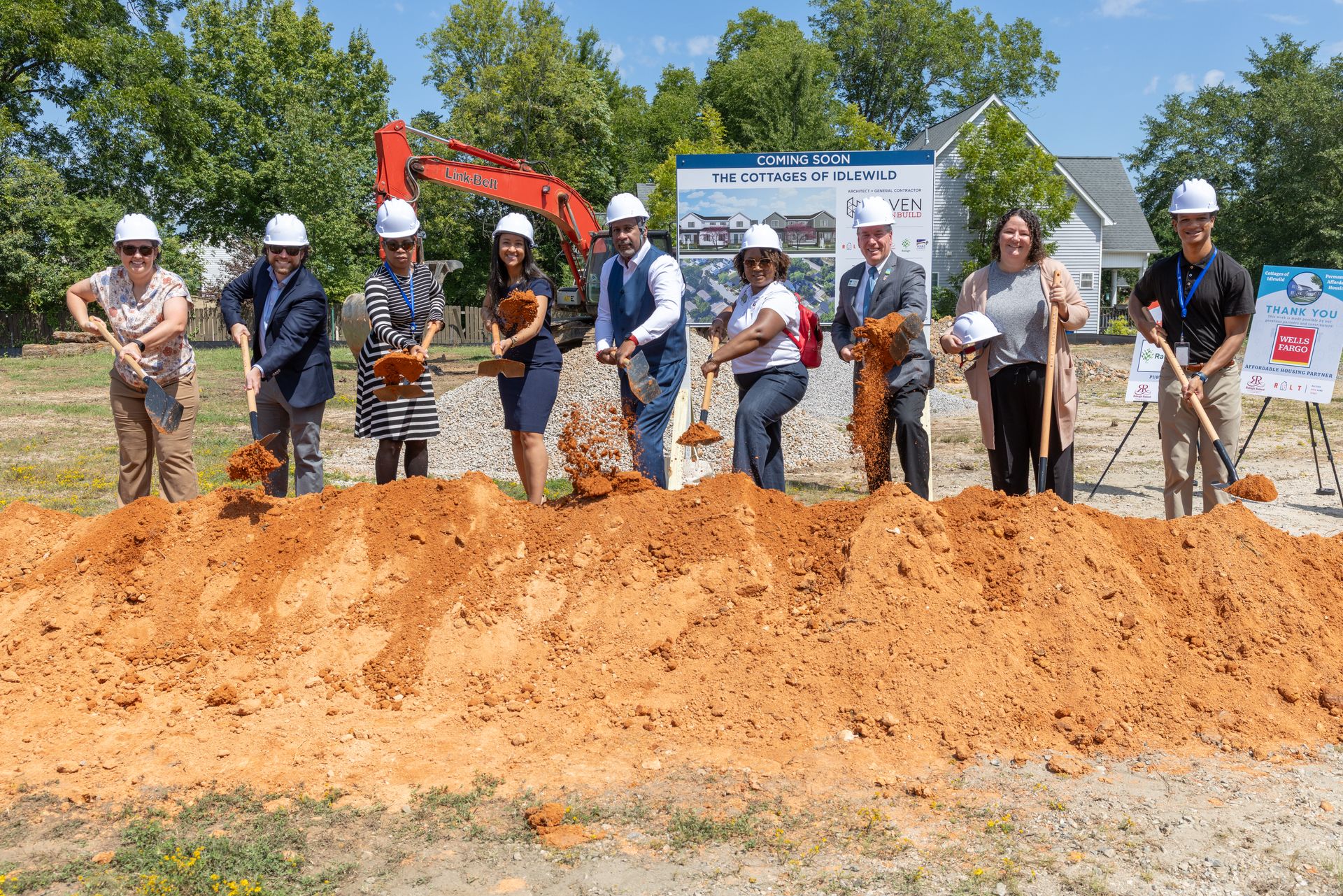
A robust pipeline including permanent supportive housing homes at New Bern Crossing, homeownership opportunities through Habitat of Humanity, a community land trust development with the Cottages of Idlewild, and affordable rental homes like Maynard Road Apartments will continue to expand options for a variety of low- and moderate-income households and individuals in the coming years.
County investments and financing tools such as the Affordable Housing Development Program continue to support construction of new rental homes, senior communities, and mixed-income developments. Partnerships with the Raleigh Housing Authority, WCPSS, Wake Technical Community College, nonprofit partners and municipal partners are advancing long-term solutions on publicly owned land, demonstrating a commitment to both innovation and scale.
Wake County continues to support first-time, low- to moderate-income homebuyers in entering the housing market through the Affordable Homeownership Program with DHIC. This program provided 65 first-time homebuyers with forgivable, no monthly payment loans up to $40,000 to purchase a home in Wake County. The homebuyer also received essential homebuyer education and one-on-one sessions.
New affordable housing helps buffer the housing market, increase overall supply, temper rent and price pressures over time, and expands options for residents who are otherwise priced out of the private market.
Strategic Plan Progress
Preservation
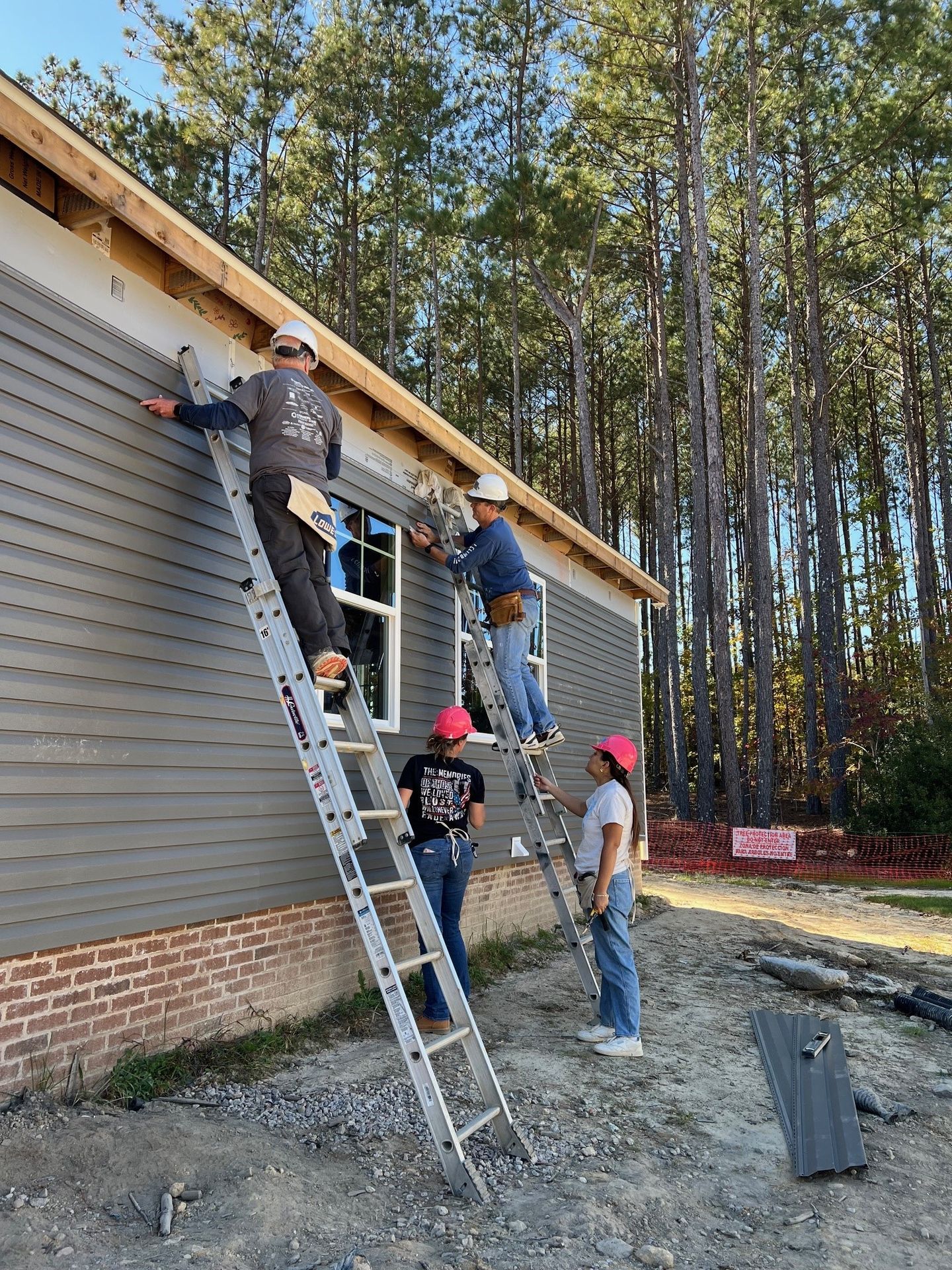
Protecting Affordability and Stabilizing Communities
Protecting the affordability of homes that already exist is one of the most effective and cost-efficient ways to stabilize existing households. To combat the loss of expiring legally-binding affordable housing (LBAR) and naturally occurring affordable housing (NOAH), the Wake Affordable Housing Preservation Fund helps safeguard rental homes at risk of sale to the market. This year, the Preservation Fund helped preserve 17 rental homes.
In addition, the County’s rehabilitation programs provide financial support to very low-income, disabled, or elderly homeowners, allowing them to remain safe in their homes despite rising costs, limited income growth, and aging housing.
WakePrevent! also plays a vital role in this preservation strategy by intervening early with households at risk of eviction or housing loss. Through targeted financial assistance, legal coordination, and housing-focused case management, WakePrevent! helps residents remain in their homes before displacement occurs. In 2025, WakePrevent! helped 639 individuals from 346 households remain in their homes despite increased affordability concerns.
These preservation tools help maintain affordability in neighborhoods where longtime residents face increasing pressure from rapid growth, redevelopment, and rising property values. While increasing housing stock and adding density are essential to meeting housing demand and accommodating growth, it is equally important to ensure that longtime residents can remain in their homes and communities. Preserving existing homes helps keep families and seniors in place, supports intergenerational stability, and ensures that both current and future residents can have quality and affordable housing in healthy, resilient neighborhoods.
Strategic Plan Progress
Prevention & System Response
Making Homelessness Rare, Brief and Non-Recurring
Cornerstone Center
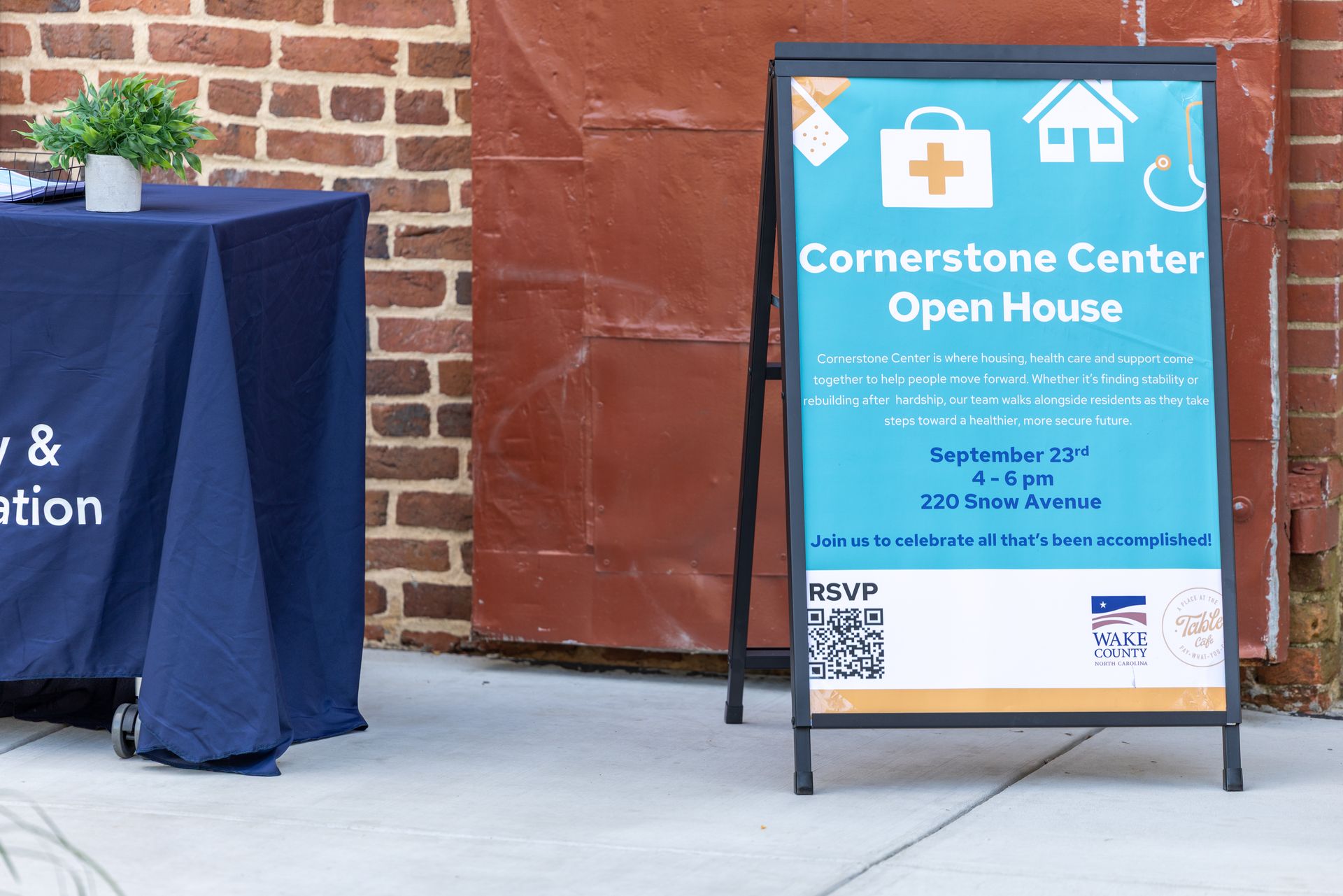
Wake County continues to invest in a coordinated homelessness response that prevents housing loss and shortens the time residents spend without stable shelter. In effort to address the increased demand on services, Wake County has created alternative options for residents in need by reopening the Cornerstone Center and launching the Second Street shelter to increase access to safe, entry-flexible options while longer-term solutions are secured.
Cornerstone Center plays a critical role in this continuum by providing supportive services, housing stabilization, and accessible service environment for individuals with complex needs. The Center delivers integrated services—including case management, housing navigation, SOAR assistance, nursing support, and vocational services—to help residents exit homelessness and sustain long-term stability.
Cornerstone Center continues to serve as a central hub where housing, health care, and stabilization supports come together to help residents rebuild after crisis and move toward long-term well-being.
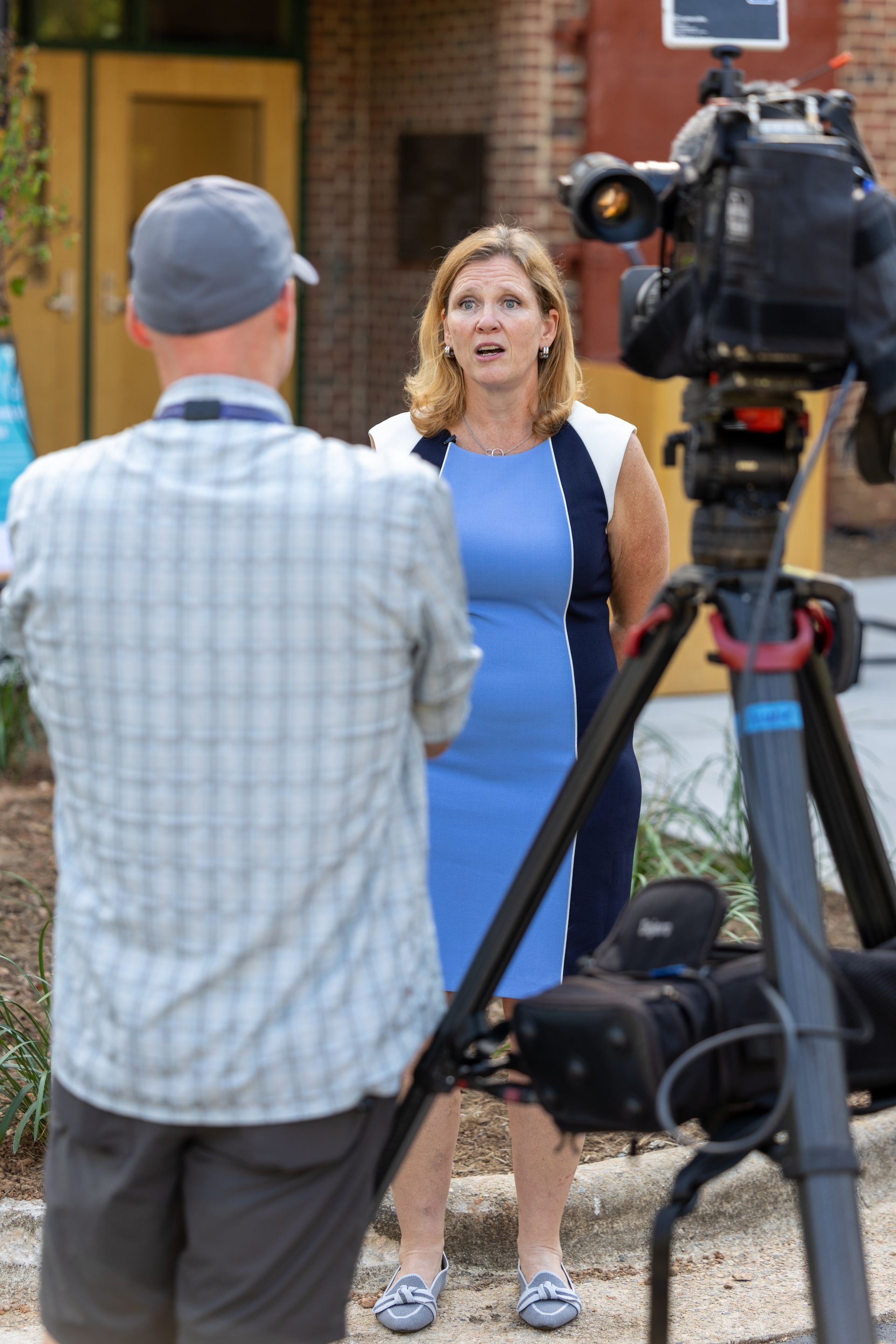
FY 2025 Cornerstone Highlights
- 46 individuals moved into Bridge Housing
- 20 residents transitioned to permanent housing
- 160 Permanent Supportive Housing (PSH) clients received ongoing case management
- 25 residents connected to healthcare, income, or behavioral health services
- Operated 20 fully furnished Bridge Housing homes for individuals experiencing chronic homelessness
- Provided residential case management at two second-chance housing communities (Lennox Chase and Brookridge)
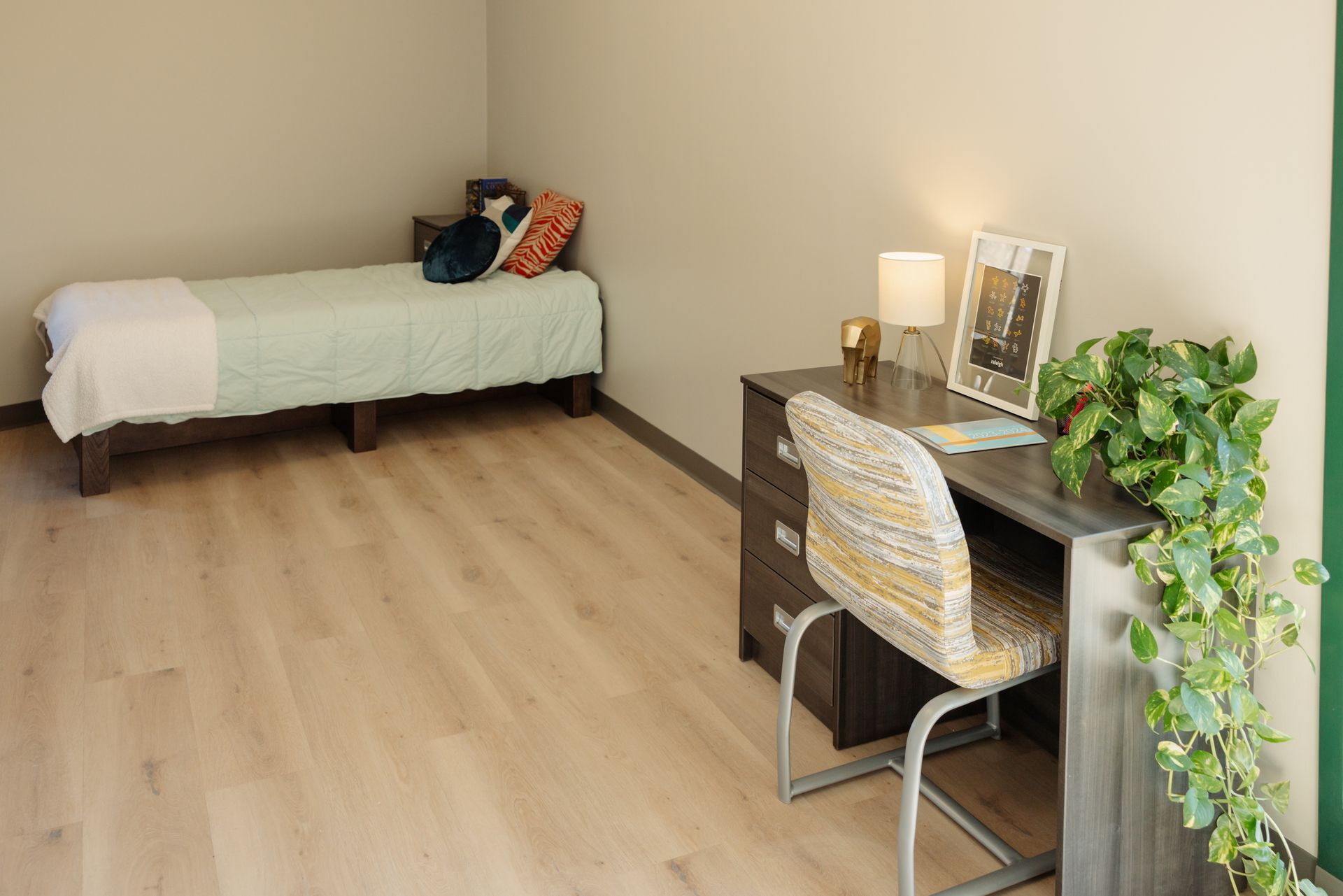
Bridge to Home and Lease 2 Home
The NACo award–winning Bridge to Home (B2H) program anchors Wake County’s rehousing system by coordinating flexible supports that help households move toward permanent housing. A complementary program, Lease 2 Home—also known as the Landlord Engagement Unit (LEU)—focuses on expanding access to housing homes through landlord partnerships.
Since 2021, Bridge to Home (B2H) has served 3,905 households, increased exits to permanent housing, and reduced returns to homelessness. The program operates in partnership with 11 community agencies to deliver coordinated services that support housing placement and long-term stability.
Service Core Pillars:
- Flexible Financial Assistance
- Comprehensive Case Management
- Housing Navigation
- Benefits Access
- Healthcare Coordination
- Transportation Supports
- Permanent Home Furnishings
Bridge to Home (B2H) demonstrates the effectiveness of a well-resourced, coordinated system for preventing and ending homelessness. Wake County has invested more than $12 million into this program to build staff capacity, expand service delivery, and fund direct assistance to residents at risk of or experiencing homelessness.
The program focuses on increasing staffing (50% of total funding), delivering direct financial support (45%), and covering essential operational expenses (5%). Through these investments, Bridge to Home strengthens the community’s capacity to deliver accessible, evidence-based, client-focused services.
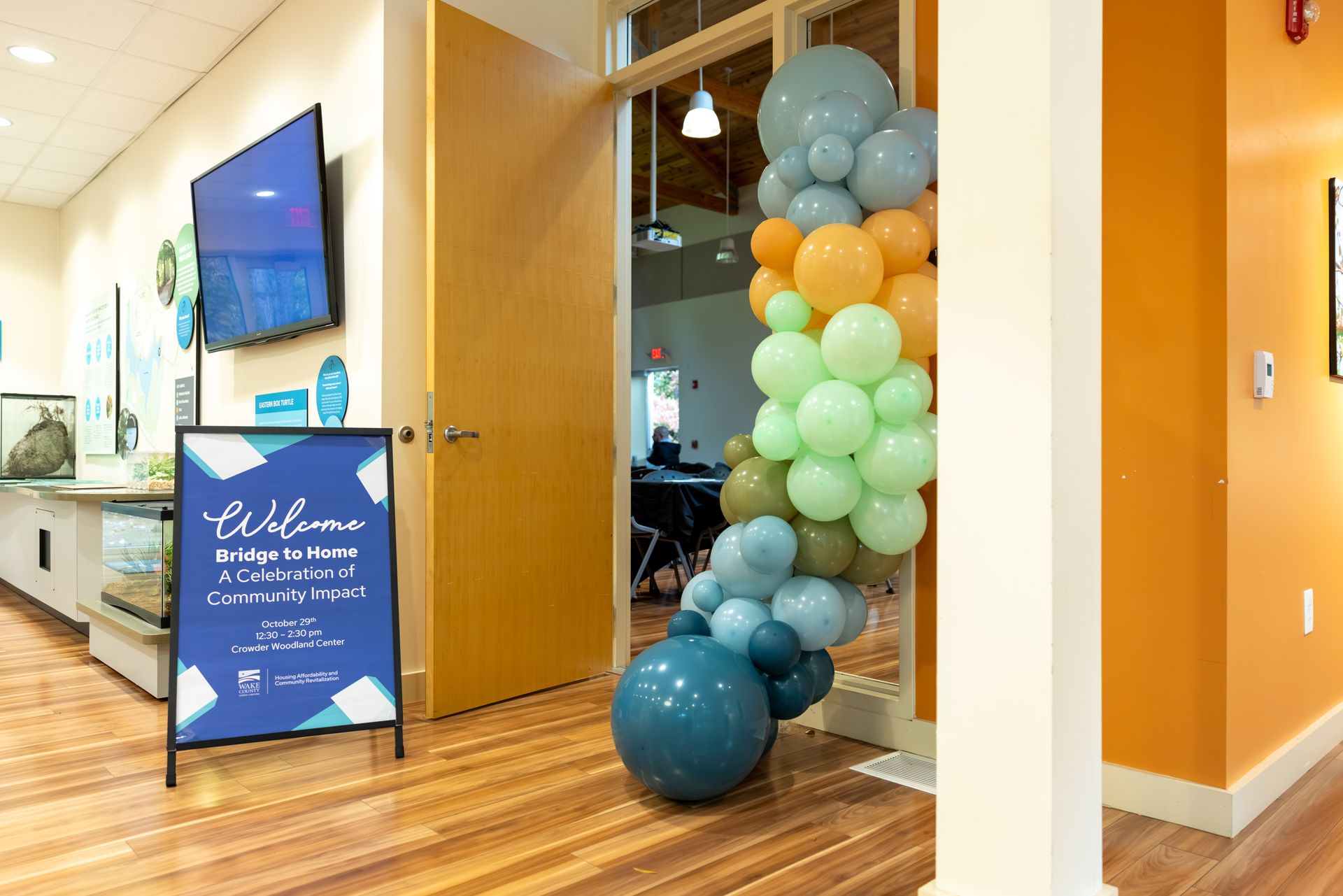
Bridge to Home Highlights to Date:
- More than 3,320 individuals exited to permanent housing
- 108% increase in the number of people housed compared to pre-implementation
- 3,447 households received services
- 17% increase in exits with increased income
- 80% increase in exits with SSI/SSDI benefits through embedded SOAR staff
- 16,364 total services provided across all partner agencies
Bridge to Home
Bridge to Home continues to transform Wake County’s homelessness response system by ensuring that households receive the right support at the right time, reducing returns to homelessness and increasing long-term housing stability.
Lease 2 Home—also known as the Landlord Engagement Unit (LEU)—expands access to housing units by recruiting and supporting landlords who are willing to rent to households facing screening or eligibility challenges. Since launching in 2022, Lease 2 Home has facilitated 693 housing placements, engaged over 423 landlords (including approximately 115 new partners), reduced the median time from referral to housing to 22 days, and supported two-year housing stability for 65% of participating households. The program provides incentives, risk mitigation tools, and ongoing landlord support, strengthening participation and supporting long-term housing stability.
Together, these programs ensure that households receive both the support needed to stabilize and the housing opportunities required to thrive, helping make homelessness in Wake County rare, brief, and non-recurring.
Since launching in 2022, Lease 2 Home has facilitated 693 housing placements.
Through the South Wilmington Street Center, Wake County has helped transition 222 individuals into permanent, stable housing this year.
South Wilmington Street Center
Additionally, through the South Wilmington Street Center, Wake County has helped transition 222 individuals into permanent, stable housing this year. The Center continues to serve as the County’s primary emergency shelter for single men, offering not only safe shelter but also on-site access to case management, behavioral health services, and housing navigation. In alignment with the Bridge to Home model, the Center has expanded its focus on housing outcomes by integrating the pillars into the service model. As a result of these enhancements, the Center has seen a 45% increase in earned income among participants, reflecting stronger connections to employment and long-term self-sufficiency.
Veteran Commitment
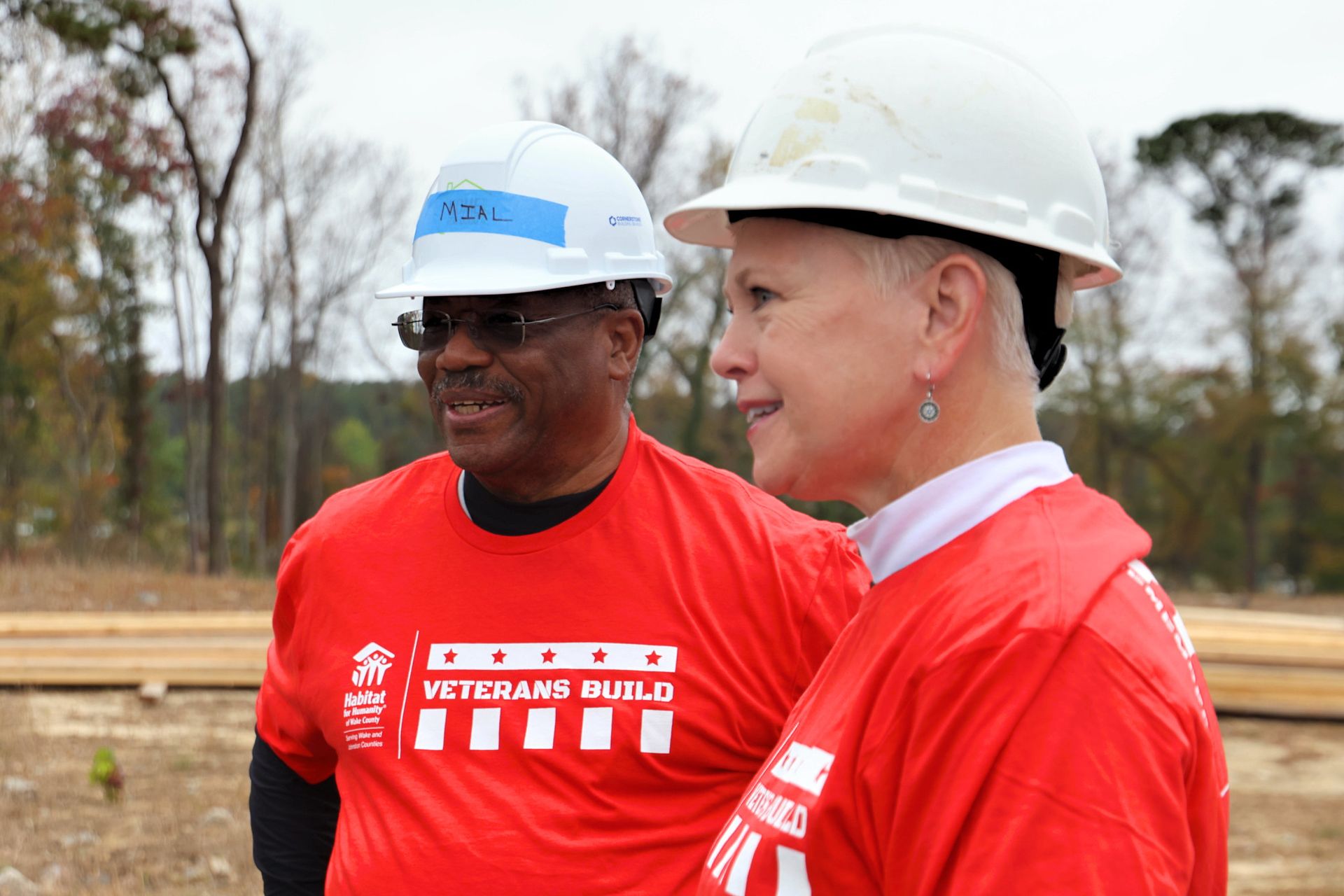
Wake County continues to strengthen its commitment to veterans by pairing HUD-VASH vouchers with enhanced housing navigation and landlord engagement. In 2025, 328 HUD-VASH vouchers were active, supporting 2,715 veterans and family members and advancing progress toward the County’s goal of increasing veterans’ access to housing and benefits.
In addition to HUD-VASH, the County provides rental assistance to veterans who are not eligible for federal vouchers and connects veterans to case management and benefits coordination that support long-term housing stability.
Fiscally Responsible
Wake County continues to provide effective responses for residents experiencing a housing crisis while promoting fiscal responsibility with taxpayer dollars. National studies report a median benefit-to-cost ratio of 1.8:1, meaning every dollar invested in programs that combine housing with supportive services yields $1.80 in benefits.
This translates to an estimated net savings of approximately $14,700 per person annually for programs that pair housing with services. Stable housing with appropriate support reduces reliance on emergency rooms, shelters, and the justice system, helping lower avoidable public costs while improving housing outcomes.
Homelessness is solvable when housing, services, and prevention efforts work together. By focusing on exits, reducing returns, and expanding access to shelter and supports, Wake County is breaking cycles of instability and building pathways to permanent housing.
Wake County’s progress reflects an aligned, data-informed strategy centered on production, preservation, and prevention. The next section provides a closer look at key housing trends and outcomes across the continuum, highlighting measurable impacts from the County’s investments.
Every $1 spent on programs that include supportive services yields $1.80 in benefits. This results in a net cost savings of about $14,700 per person annually.
2025 By the Numbers
Together with municipal partners, developers, landlords, and service providers, Wake County is strengthening housing stability through targeted investment and quality services. The following data highlights key trends shaping the county’s housing landscape today.

By the Numbers
Affordability Snapshot
Rent and Income Growth
From $1,521 in 2015
From $54,336 in 2015
Affordability Gap
Cost Burdened (2023)
Affordable Homes Sold
By the Numbers
Supply Snapshot
2025 Impact
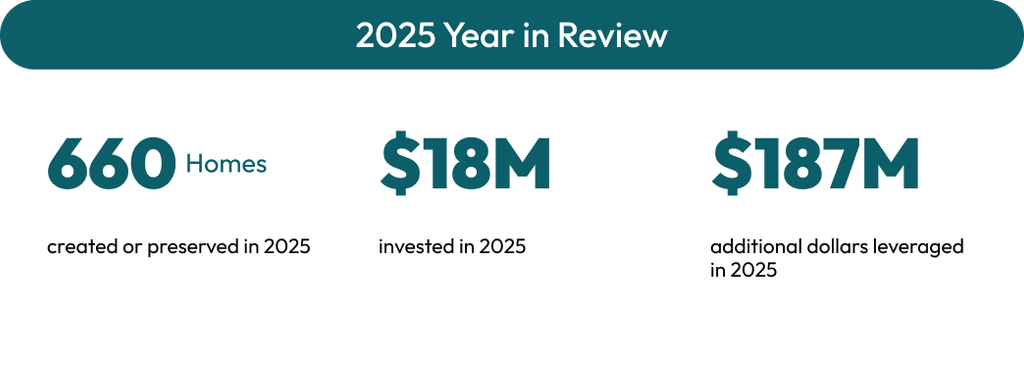
660 Affordable Homes Created or PreservedCapital Investment
$18M Invested in 660 homes in 2025Major Repair Program
$1.4M Critical repairs for low-income and senior ownersRehab Program
23 Repaired homes for elderly/disabledPreservation Fund
225 Homes preserved countywide through Wake County preservation investmentsFY2025 Investments
| Development | Developer | Type | Homes |
|---|---|---|---|
| Chapanoke | Harmony Housing Development, Inc. | New | 200 |
| Fisher Grove | DHIC, Inc. | New | 166 |
| Grosvenor Gardens | CASA | Preservation | 62 |
| Abbey Spring | Evergreen Construction Company | New | 56 |
| The Canopy | DHIC, Inc. | New | 51 |
| Heritage Park Senior Phase IB | Brinshore Development, LLC | New | 51 |
| Biltmore Hills | POAH | Preservation | 50 |
Recently Completed Developments
| Development | Developer | Homes |
|---|---|---|
| Toulon Place | Solstice Partners | 200 |
| Rock Quarry Landing | South Creek Development | 188 |
| Stone Glen | DHIC | 164 |
| Thrive at South End | Blue Ridge Atlantic | 90 |
| Aspen Spring | Evergreen | 84 |
| The Carrington | Connelly Development | 72 |
| Biltmore Hills | POAH | 50 |
| Terrace Spring | AGPM/Poplar | 48 |
| Courtyard Commons | ABLe Capital | 17 |
By the Numbers
Stability Snapshot
Benefits Accessed
$7.9MBenefits accessed by Wake County residents
2024 Point-in-Time Count
People experiencing homelessness in Wake County
Reductions in Veteran Homelessness Since 2021
Veteran Support Success
Prevention & Engagement
Shelter Outcomes
Supportive Housing (Cornerstone & RAHP)
What's Next in 2026
In the year ahead, Wake County will build on its momentum by advancing the strategies that have shown the greatest impact producing more affordable homes, increasing housing opportunities for low- and moderate-income households, preserving affordability, preventing and ending homelessness, and deepening local partnerships. These efforts will ensure that investments made today create lasting opportunities for residents across every municipality.
2026
Production
Meeting the 2,500 unit Goal (Goal 1)
Wake County will continue making progress toward creating at least 2,500 affordable homes by 2029 through:
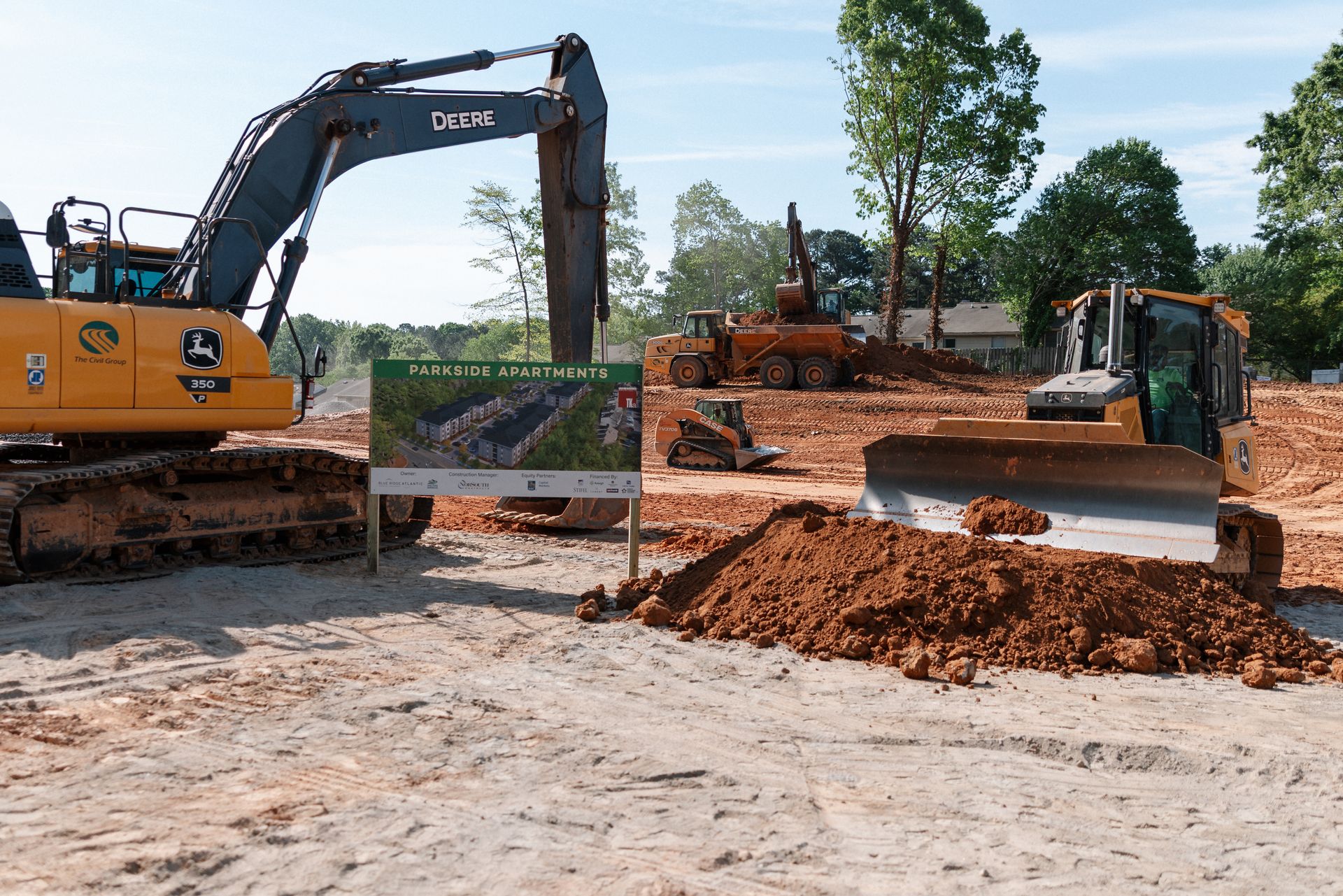
- Launching the Housing Opportunity Impact Fund to support new affordable housing development in areas of economic opportunity
- Administering the 2025 cycle of the Affordable Housing Development Program (AHDP), committing at least $10 million to affordable housing projects County-wide
- Increasing the supply of affordable homeownership opportunities through strategic partnerships with local community land trusts, homebuilders, and the continuation of the Affordable Homeownership Program
- Monitoring the progress of 2025-funded developments as they move toward construction and completion.
- Ensure timely completion of pipeline developments.
Funding in 2025
636 Total Homes| Development | Developer | Type | Homes |
|---|---|---|---|
| Chapanoke | Harmony Housing | New | 200 |
| Fisher Grove | DHIC, Inc. | New | 166 |
| Grosvenor Gardens | CASA | Preservation | 62 |
| Abbey Spring | Evergreen Const. | New | 56 |
| Heritage Park Sr IB | Brinshore | New | 51 |
| The Canopy | DHIC, Inc. | New | 51 |
| Biltmore Hills | POAH | Preservation | 50 |
Development Pipeline
1,532 Total Homes| Development | Developer | Homes |
|---|---|---|
| New Bern Crossings | Greystone / Haven | 192 |
| Birch & Branch Apts | Oppidan | 180 |
| Tryon Station | Bradley Dev | 176 |
| Preserve at Gresham Lake | LDG Development | 156 |
| Parkside Apartments | Blue Ridge Atlantic | 144 |
| 919 at Cross Link | South Creek Dev | 142 |
| Terrace at Rock Quarry | South Creek Dev | 132 |
| Maynard Road Apts | Laurel Street | 126 |
| Rose Park Manor | Beacon Mgmt | 81 |
| Villas at White Oak | Trinity Dev | 64 |
| Hampton Spring Apts | Evergreen Const. | 56 |
| Lake Haven Apts | Lyle Gardner | 56 |
| Cottages of Idlewild | RALT | 18 |
| Hope Village | CASA | 9 |
2026
Preservation
Protecting Housing Affordability (Goal 1)
To stabilize existing households and strengthen community stability, Wake County will:
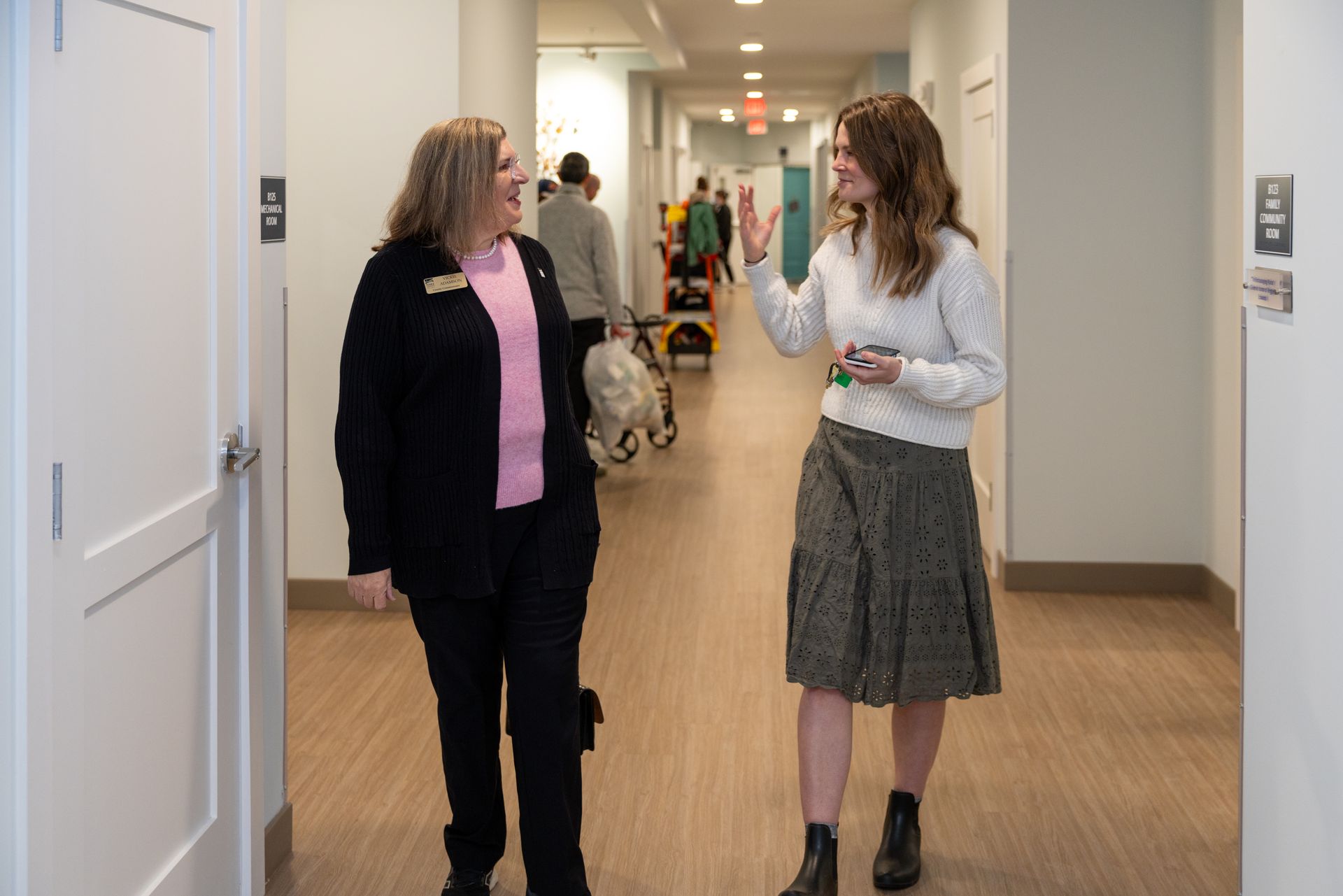
- Enhance low-income homeowner rehabilitation grants through a streamlined program and strategic partnerships
- Continue investment through the $61.6M Preservation Fund to preserve existing affordable rental housing
- Continue negotiating with developers for extended affordability periods for projects supported with AHDP funding
- Leverage opportunities to reinvest in previously supported projects, reinvesting County dollars
- Expand early interventions alongside prevention strategies to keep residents in housing
- Redesign of the WakePrevent! program to support long term affordability through housing retention interventions
2026
Prevention
Making Homelessness Rare, Brief, and Non-Recurring (Goal 2)
Wake County will continue working toward ending homelessness by:
- Completing Second Street Shelter Phase II. Increase exits to permanent stable housing by 5% year on year
- Increase exits to permanent housing among Bridge to Home partner agencies by 10% year on year.
- Enhancing Permanent Housing and Supportive Services division programming to efficiently connect and stabilize homeless individuals with high needs with rental supports and case management services
- Collaborating with the newly established Continuum of Care Lead Agency department to enhance community capacity to provide outreach, shelter, housing, and case management supports to homeless Wake County residents
- Using data-informed strategies to increase exits and reduce returns to homelessness.
2026
Veterans
Veterans: Expanding Access and Ending Veteran Homelessness (Goal 5)
The County will maintain its commitment to veterans through:
- Collaborating with the VA and Wake County Housing Authority to expand access to HUD-VASH vouchers
- Providing rental assistance to veterans not eligible for HUD-VASH
- Continuing to provide case management to homeless veterans to connect them with housing and supports
- Pairing County and HUD-VASH vouchers with expanded navigation and landlord engagement
- Expanding access to Veterans Services Officers to connect veterans with benefits that may prevent housing instability before it starts
2026
Partnerships
Partnerships: Advancing Outcomes Through Collaboration
Wake County will deepen partnerships that strengthen countywide housing outcomes by:
- Building municipal capacity to engage with housing affordability challenges through the Municipal Impact Fund
- Aligning housing development with Wake County’s PLANWake growth goals
- Collaborating with County departments to improve consistency across strategic objectives
- Redesigning the Wake Prevent! program to incorporate legal services for residents facing evictions
- Further explore opportunities to offer Bridge Housing for families experiencing homelessness
Conclusion
Progress in housing happens when communities move with shared purpose. This year’s results reflect the commitment of residents, service providers, developers, business partners, landlords, municipalities, and County leaders working together to expand opportunity and strengthen housing stability. As Wake County continues to grow, we remain focused on solutions that stabilize existing households and ensure every resident has access to a safe and affordable place to call home.
The work ahead will require persistence, partnership, and innovation. By combining data-driven strategies with community-driven insight, Wake County will continue building on its momentum creating and preserving affordable homes, strengthening the homelessness response system, and advancing positive outcomes across all municipalities. Progress is a shared endeavor, and our continued collaboration will shape a stronger Wake County for generations to come.
Acknowledgements
Wake County’s Department of Housing Affordability and Community Revitalization would like to thank our incredible staff, Wake County colleagues, and community partners for contributing to this Annual Housing Impact Report.
We would like to also acknowledge our Board of Commissioners for their commitment to addressing the critical issue of affordable housing within our community.

Chair Don Mial
District 1

Vice Chair Safiyah Jackson
District 2

Cheryl Stallings
District 3

Susan Evans
District 4

Tara Waters
District 5

Shinica Thomas
District 6

Vickie Adamson
District 7
We would also like to extend a special thank you to the Research, Data and Systems Division staff for bringing this report together.

Jennie-Ann Cole, PhD
Research, Data & Systems Division Director

Isabella Niemeyer, MCRP
Housing Data Systems Lead

Morgan Mansa, MPPA
Director of Housing Affordability & Community Revitalization